
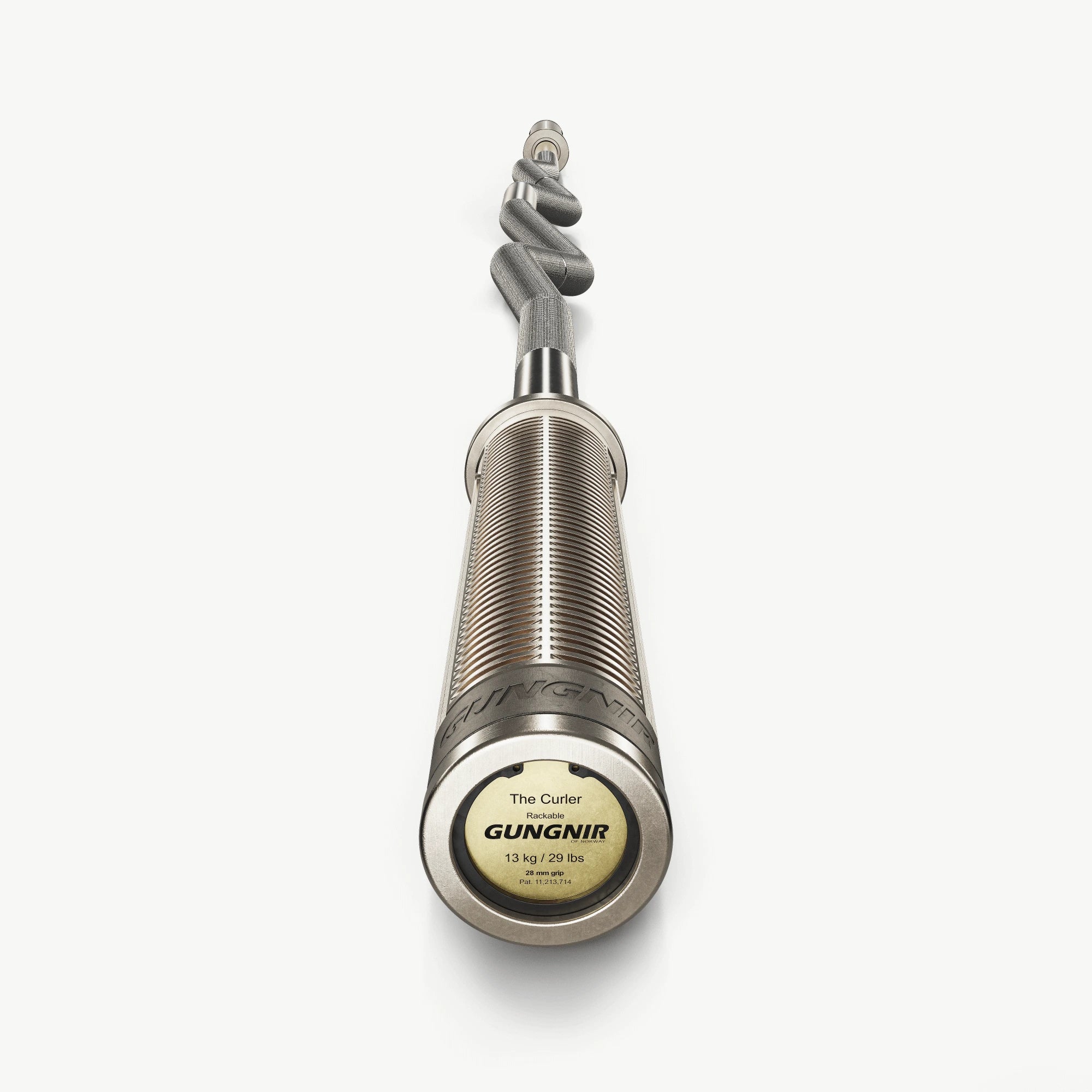
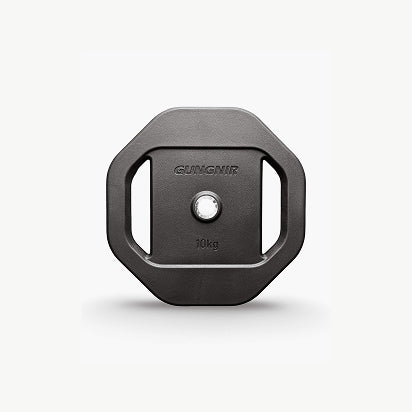

In late 2017, two friends from high school and former personal trainers, Andreas and Audun, found themselves small talking about weightlifting, gym equipment, and all things gym related. Sharing experiences, comparing notes on what works and what doesn't. Eventually, the conversation landed on safety collars. They break. They disappear. You spend half your session looking for them, picking them up, wrestling with them. Sometimes they're just annoyingly hard to get on. Why do we settle for this? There are better types out there, surely. But they all end up gone or broken sooner or later.
They left it at that. But it wouldn't be long before Audun called Andreas with one question: "Should we try and do something about this?" That annoyance had lived in the back of Andreas' mind for years, ever since he first thought there should be a better solution, back when he was a PT spending every day with bars and gym equipment. So naturally, the answer was a resounding yes.
They sat down the next night and scoured the internet, looking for any sign of a solution that solved the problem they had in mind. Had anyone thought of the same thing? Products, patents, ideas, anything. Nothing of notice. Maybe a patent or two from long ago, but visibly complex in design and likely impossible to manufacture at scale, at least from a cost perspective. That was good news. It meant they could move forward.
At the time, both Andreas and Audun were studying a master's degree in entrepreneurship and innovation at NMBU, near the capital of Norway. The degree brought together graduates from very different educational backgrounds, economists, engineers, nurses, marketers, all under one roof. Among them was Markus, an engineer with big visions and a sharp eye for product design. They sat him down and explained their case. Luckily, they convinced him, and he agreed to help design something.
Andreas and Auduns' original idea was a plate with some kind of tightening mechanism in the center. Load your weights, push a button, and have the plate lock onto the bar somehow. That concept fell apart quickly. Too costly to manufacture, too complex, and it meant every single plate had to have the mechanism built in. Better to put the solution in the bar itself. More complicated in its own way, but it made far more sense as a product. So Markus got to work. He started looking into ways of building a barbell with a weight plate locking system built in, something simple to use, compact, not too difficult to manufacture, affordable, and built to last. The challenge intrigued him, and he started drawing.
But first, they had to understand the market. Were they the odd ones out, or did other people feel the same way? Andreas and Audun put together both qualitative and quantitative studies, going out to gym members, personal trainers, and gym owners to test the hypothesis that this was a real and widespread problem. Would people genuinely value a bar with a locking mechanism built in? Or were they perfectly happy with clips and collars as they were? It turned out a vast majority agreed with them. That was motivating.
The weeks went by. Concept after concept emerged, each one sharing the same fatal flaw. Either it was impossible to manufacture, too fragile to survive real use, or just not simple enough in practice. Springs, friction, even water made their way into the equation at various points. None of them made it past the drawing board. For a while, it looked like there might be no way to do this without compromising something fundamental.
They brought the concept to Innovation Norway, hoping to get the wheels turning and secure a little funding for market research and prototyping. No luck. "You've already come too far for this grant," they were told. Frustrating at the time, but in hindsight, maybe they should have taken that as a compliment.
Then one day, Markus came to them with something different. A concept where a section of the bar itself detaches and slides along the length of the sleeve, locking in place with a pair of teeth and a magnet to hold everything together. They were stoked. It looked good, seemed simple enough, and might just be scalable. This could work.
Some time later, word came through one of the admins at the university innovation workshop. There was a grant, much bigger than the one they had just tried for, that might be worth a shot. It was a one million NOK grant from the Norwegian Research Council, awarded annually to a very small number of master's students from different universities all over Norway with innovative concepts worth developing. The odds were slim. The council funded real problem solvers, robotics, sensory technology, agricultural tech. Real world problems with real world stakes. Would a barbell for weightlifting stand a chance? They couldn't resist. The upside would be enormous if they landed it.
They went to work on the application. Spent weeks writing it, almost like a dissertation. They would submit a finished version, only to have it sent back with notes on what was missing. Once. Twice. Three times. They scrambled to gather whatever supporting evidence they could, reaching out to gym owners for letters of interest that might give their application an edge. The head of product at EVO, a gym chain that would later become one of Gungnir's biggest customers in Norway, was one of them. "This is a real problem you're trying to solve. If you pull it off, I'm interested," he told them. They even managed to pre-sell the concept to a gym owner in Lillehammer who, as it happened, had been Andreas' boss when he worked as a PT during his bachelor's degree.
And then came the pitching round, where they would plead their case before a panel. All they had to show was a single 20 centimetre long, blue plastic 3D print of an early concept. The panel passed it around the table. One of them asked if it would hold up in a gym. They nodded, placing their faith in Markus's 3D model analyses. That has turned out to be the aspect they have had to educate and convince people about the most to this day: durability and solidity. It's not hard to understand.
A few weeks later, the call came. They got the grant. They now had the means to create a real prototype, begin testing, start the patenting process, and go deeper into their market research. Real money to do this properly. Not just as a student project.
Around this time, the fourth founder joined the team. Øyvind, a tall former strongman with a sharp eye for sales and a history of building his own strength equipment. Exactly the kind of person they needed to help push the product forward and continue developing it. He was impressed with the concept and wanted to be part of what came next. Real prototypes followed, along with slight variations of the concept, tested and refined to find out what actually worked in practice.
The Spear of Odin
And eventually, they chose a name: Gungnir. From Norse mythology, it is the name of the spear belonging to the god Odin. As you would expect from the weapon of a god, Gungnir is no ordinary spear, much like the bars they set out to build. An appropriate name for a Norwegian and Scandinavian barbell designed to be something beyond ordinary.
At Gungnir of Norway, we take pride in referencing a bit of history while creating products that stand out among their peers.
